
Thursday, 25 April 2019

Wednesday, 3 April 2019
GLOG Parasite Class: Spellbug
Check it out, I made a magic parasite
Wizards learn their magic, clerics pray for it, warlocks deal for it… you were born with it.
didn’t have that outlet. You’re a font of magical energy, but you just can’t use it. You were
probably frustrated by that. You might have tried to murder wizards and eat their teeth or
something to learn magic, but no spell ever came out.
However, that doesn’t mean you can’t learn spells. And once you learned a spell, you taught it to
someone else. After that, it was almost too easy to infect their mind with your specially-bred
magic virus.
You’re a computer virus for wizards. You can also be used like a magic wand. Have fun.
Sunday, 10 March 2019
Pit Monks
Note: I haven't written it yet because I'm lazy, but this class
was origionally designed for Grant Howitt's Spire system. Go check it
out.
Pit Monks
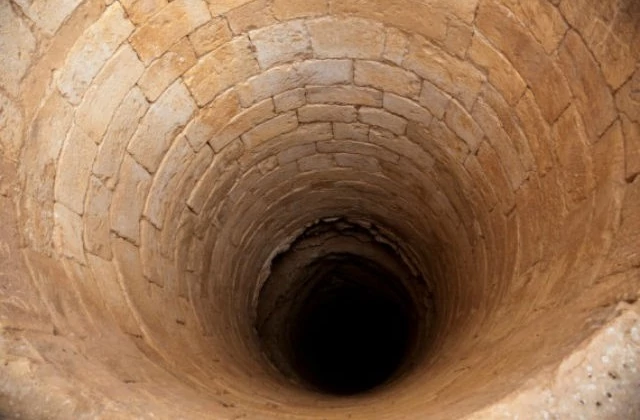
In the middle of a city in the middle of the world, there is a well. A very, very large well.
Well, not that large. About 10 feet wide or so, but still big, for a well.
Well, this well is called the Pit. It’s bottomless.
Two orders of monk live in this bottomless pit, one at the top, and one at the bottom. They are
bitter enemies, but can’t get to each other, because the pit is bottomless.
bitter enemies, but can’t get to each other, because the pit is bottomless.
They live in burrows, going all the way down the pit. They practice falling a little further each day,
so that they’re eventually immune to it. Their philosophy is one of emptiness and (w)holeness, of
the freedom to fall forever mixed with the constraints of a 10 foot wide pit.
so that they’re eventually immune to it. Their philosophy is one of emptiness and (w)holeness, of
the freedom to fall forever mixed with the constraints of a 10 foot wide pit.
Their master is named Otvor Milenec. He jumped into the pit years ago. He’s probably dead by now.
Class: Pit Monk
Starting Equipment: A grappling hook and spiked shoes.
Starting Skill: 1=history, 2=religion, 3=mountains
A
|
survivor of 10,000 falls, falling kick
|
B
|
crawl of the spider, depth sense
|
C
|
wind step
|
D
|
endless strike, enlightened by violence
|
You get +1 Move for every Pit Mystic template you have.
Survivor of 10,000 Falls
You’ve jumped off so many cliffs and bottomless pits it’s practically routine for you. You reduce all
falling damage by 1. Every time you take damage from a fall, increase this reduction by 1. After you
increase this reduction past 20, you no longer take any damage from falling.
falling damage by 1. Every time you take damage from a fall, increase this reduction by 1. After you
increase this reduction past 20, you no longer take any damage from falling.
Falling Kick
Your unarmed attacks deal 1d6+Strength modifier damage. If you fell on a creature and attacked it with
an unarmed strike in the same turn, this deals +1 damage for every 10 feet you fell.
an unarmed strike in the same turn, this deals +1 damage for every 10 feet you fell.
Crawl of the Spider
When climbing walls, count your Strength as 21. You can climb impossible things at -10 to your roll
(sheer glass walls, frictionless slopes, etc).
(sheer glass walls, frictionless slopes, etc).
Depth Sense
You always know exactly how far any drop will be before you make it. In addition, you get +4 to any
roll to catch yourself before or while falling.
roll to catch yourself before or while falling.
Wind Step
Throw yourself off a ledge that is at least 20 feet high. On a success, the wind catches you, and you can
fly as fast as a horse can run for the next 1d6+1 rounds or until you land. This ability only works if you
are somewhere the wind can get to you, and only a number of times/day equal to your number of Pit
Monk templates.
fly as fast as a horse can run for the next 1d6+1 rounds or until you land. This ability only works if you
are somewhere the wind can get to you, and only a number of times/day equal to your number of Pit
Monk templates.
Endless Strike
Your fists and kicks carry the power of the bottomless pit. When you hit a creature you hit them along
all possible versions of themselves. Your attacks ignore armour and damage reduction.
all possible versions of themselves. Your attacks ignore armour and damage reduction.
Enlightened by Violence
When you hit a creature with an attack, you can make a save against any curse or mind-affecting
condition affecting you, even if it would not normally allow for a save.
condition affecting you, even if it would not normally allow for a save.
Monday, 19 February 2018
Healing Magic is Horrible
“Healing magic isn’t clean. Not by a long shot. Magic is messy and unpredictable, despite being (technically) a science. When you heal someone, you aren’t putting your hands on them and saying the magic words and they’re all better. You’re taking the two ragged ends of the wound and convincing the person’s body to accept them. Or cauterizing an injury with your bare hands. Or just telling death to fuck off. It sucks.”
“Healing magic is brutal, traumatizing, and dangerous, for both parties involved. It’s like performing surgery, but your tools are all rigged with sensitive magical explosives that can go off partway through the operation. Have you ever tried to negotiate with an infection? Hearing their rasping, sickly voices, the smell of disease in your nose… it’s enough to drive anyone to madness. I once saw guy break a leg while he was with a plant mage; the bone was just hanging out. The crazy fucker cut the damn thing off and shoved a sapling in the wound. Pete needs to prune his legs now.”
“Does a damn fucking good job though.”
TL;DR: healers are less this:
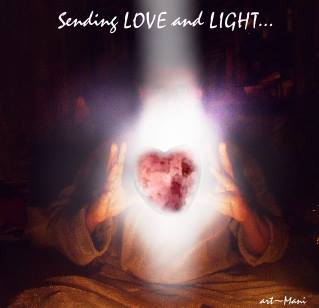
And more this...

Crossed with this...
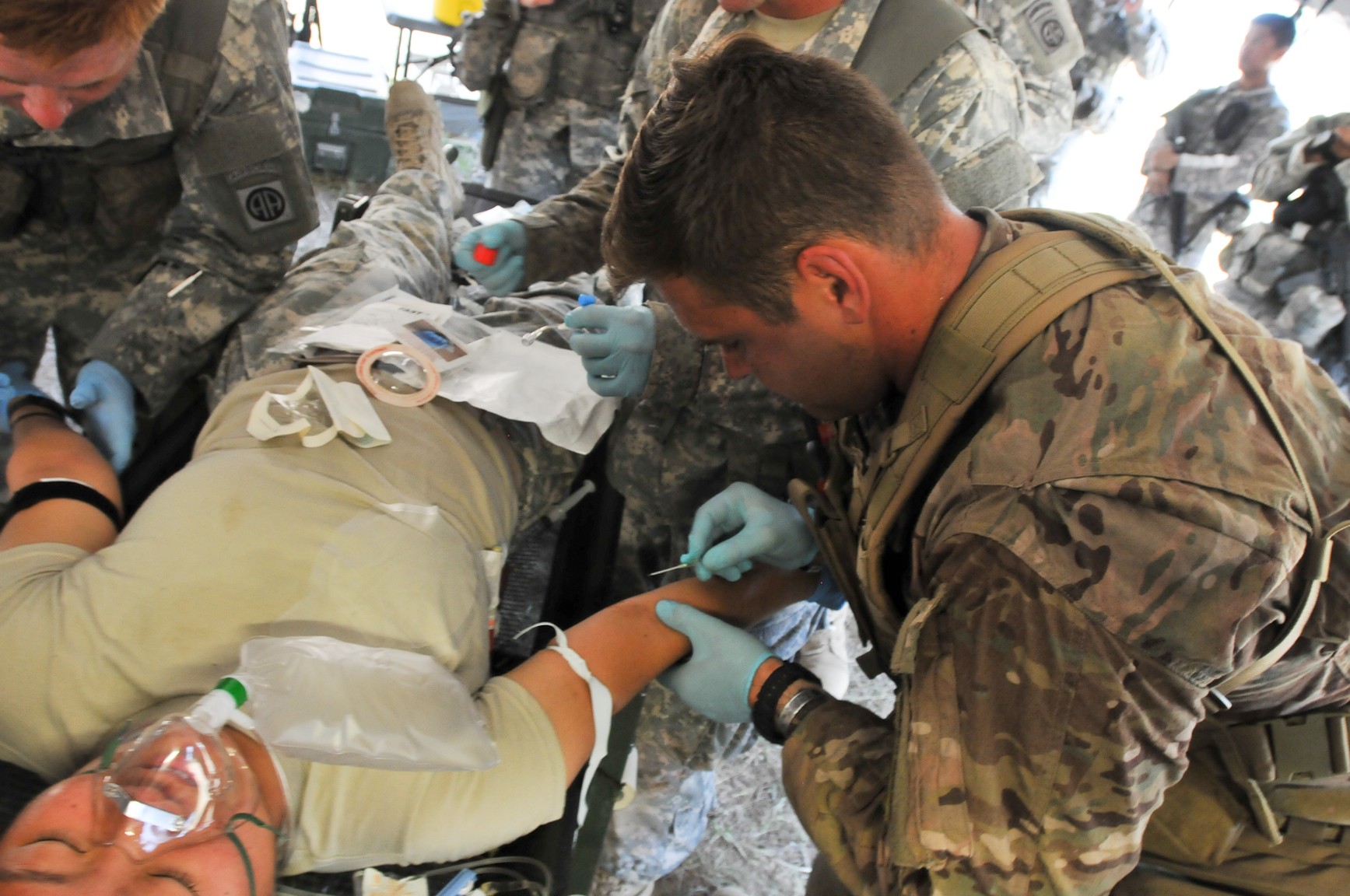
And a lot more blood
“Healing magic is brutal, traumatizing, and dangerous, for both parties involved. It’s like performing surgery, but your tools are all rigged with sensitive magical explosives that can go off partway through the operation. Have you ever tried to negotiate with an infection? Hearing their rasping, sickly voices, the smell of disease in your nose… it’s enough to drive anyone to madness. I once saw guy break a leg while he was with a plant mage; the bone was just hanging out. The crazy fucker cut the damn thing off and shoved a sapling in the wound. Pete needs to prune his legs now.”
“Does a damn fucking good job though.”
TL;DR: healers are less this:
And more this...
Crossed with this...
And a lot more blood
Thursday, 15 February 2018
The Hag of Brewer's Wood
This is a small, simple area/adventure you can plop into your campaign wherever. It works best in a northern swamp, boggy and cold. It is shown here in a hexmap format. It uses the silver piece standard, so if you're using D&D or something, just convert all cash to gold.
 Brewer's wood isn't quite a town: more like a collection of campfires, tents, and other assorted vagabonds and bandits. They aren't all bad, but the whole place is quite unpleasant.
Random Encounters in Brewer's Wood
1d6:
33.21 has a wooden wall trying to protect the hunters squatting beside it from the cold winds from the snowlands. It doesn't work, and they are miserable and cold. They will trade you meat and gold for warmth.
The Hag of Brewer's Wood
The Hag of Brewer's wood resides in 34.21. Her name is Ulva Von Stein. The hex itself is shrouded in mist, which lets people in, but does not let them out without permission from Ulva, who lives in a giant barrel in the middle of the hex.
She’s been stealing children from the town and burying them in the swamp in barrels. She wants children of her own, but doesn't quite know how to go about it. Some of the children are still alive. Others are undead. If she is threatened, she will raise 2d4 barrels from the ground. 1d4-1 of them will burst open and coughing, half dead children will slide out. The rest will be smashed open from the inside, and ghoulish children will appear, hungry for flesh. Returning living children to their parents will net you 5 silver each.
Ulva wants to be left alone, but will trade you alcohol for necessities or more children. The alcohol allows you to walk through the mists surrounding the swamp. In her hut, there are 1d6 bottles of special mead, labeled with a walking corpse. She won't sell you these. They smell like death, but taste like oddly meaty honey. Drinking one will allow you command mindless undead for 24 hours by speaking to them.
There is a recipe in her hut, which allows a necromancer to make the undead-commanding alcohol (it takes a magically incribed barrel costing 20 silver, 40 silver worth of honey, and some magical energy, as well as 1 month to ferment in a barrel with a corpse in it, and produces 5 bottles). The bottles can be sold for 30 silver each, or the recipe for 100 silver.


Random Encounters in Brewer's Wood
1d6:
- 1d6 hunters with fresh food, in good spirits.
- 1d6 hunters without food, desperate, will trade (they have next to nothing, and if they aren’t bartered with, 3-in-6 chance one will try to steal from you).
- A family of 1d6 huddled around a fire (1d4-1 children). They are neutral, but become friendly if you offer them food. They will not share their food with you (they don’t have enough to go around as it is).
- 1d6 bandits who want everything you own.
- 1d6 bandits enforcing a toll (1d12 sp/person)
- 1d4 small zombie children soaked in alcohol. They came from 34.21. 1-in-6 chance that it will instead be one living child, who will tell you about Ulva Von Stein.
33.21 has a wooden wall trying to protect the hunters squatting beside it from the cold winds from the snowlands. It doesn't work, and they are miserable and cold. They will trade you meat and gold for warmth.
The Hag of Brewer's Wood
The Hag of Brewer's wood resides in 34.21. Her name is Ulva Von Stein. The hex itself is shrouded in mist, which lets people in, but does not let them out without permission from Ulva, who lives in a giant barrel in the middle of the hex.
She’s been stealing children from the town and burying them in the swamp in barrels. She wants children of her own, but doesn't quite know how to go about it. Some of the children are still alive. Others are undead. If she is threatened, she will raise 2d4 barrels from the ground. 1d4-1 of them will burst open and coughing, half dead children will slide out. The rest will be smashed open from the inside, and ghoulish children will appear, hungry for flesh. Returning living children to their parents will net you 5 silver each.
Ulva wants to be left alone, but will trade you alcohol for necessities or more children. The alcohol allows you to walk through the mists surrounding the swamp. In her hut, there are 1d6 bottles of special mead, labeled with a walking corpse. She won't sell you these. They smell like death, but taste like oddly meaty honey. Drinking one will allow you command mindless undead for 24 hours by speaking to them.
There is a recipe in her hut, which allows a necromancer to make the undead-commanding alcohol (it takes a magically incribed barrel costing 20 silver, 40 silver worth of honey, and some magical energy, as well as 1 month to ferment in a barrel with a corpse in it, and produces 5 bottles). The bottles can be sold for 30 silver each, or the recipe for 100 silver.
Drawn by some medieval dude.
Sunday, 16 July 2017
Wandering Necromancers and the City of the Dead
A History of Death
Necromancers have been around for a very long time. Almost as long as death itself. They are older than humans, and older than most of the gods. The very first necromancers arose from a race long forgotten, back when words had real power. Back when death was knew, and even more frightening than it is today.
Once upon a time, a young child asked their mother to get up. They sobbed as dirt fell, covering her corpse until it was six feet underground.
But as I said, words had power. The mother's body heard her child, even if the soul had long since departed. She dug her way up before nature even knew what was wrong.
Thus began the necromancers. Kings eternal over kingdoms undying.
Wanderers
Nowadays, most necromancers are Wanderers. You do get the odd extra-antisocial manic who wants to live in a dungeon and conquer the lands of the living, but they don't last long. Sometimes they starve to death, or their focus lapses and their creations eat them. Anything can happen.
There are also sometimes pirates or priests, but they're a different thing altogether.

Wanderers, although despised, looked down on, and ridiculed by many, are an integral and valuable part of society. Like retail workers, if they could run an entire store with the corpses of your ancestors and sheer force of will.
Necromancers, in those places out of the eye of the True God, or simply willing to bend some rules, provide labour, defence, or even entertainment, for a fee. Many of the more selfless ones even forgo the cost, doing good deeds for free.
The typical life of a Wanderer follows a simple pattern: Get to town with a group of undead, reanimate as many more as possible, work for a few weeks, get kicked out, repeat.
Of course, they often move on simply because the pay wasn't good, or because they got bored, but mages are notorious drama queens.
All schools of wizardry have a negative emotion that they suffer increasing amounts of, simply from casting their spells. Necromancers are lonely. They have the power at their fingertips to raise armies, bring the dead (partially) back, and turn enemies into friends, but they are lonely.
It's an ironic hell that they live in.
Most small towns were built by Wanderers, or at least started by them. When settlers came, the Wanderers paved the way. They built the first houses in the mountains, and gave the order to drag their own limp, dehydrated bodies across deserts to found sugar plantations.
Wanderers have a strained relationship with the Church of the True God. The Church's inclination to kill all necromancers other than themselves is conflicted with their desire to make life better for themselves and, to a lesser extent, their followers.
With the common folk, Wanderers are treated as an unpleasant necessity. Some towns are more welcoming than others, but the general respond to a Wanderer is 'here's some cash, do the job, and get out.'
Necromancers and ghouls generally fight, as both of them view corpses as a precious commodity. Both of them together, however, will often make a great team.

Necromancy. What is it?
Now: Necromancy is defined as:
Necromancy (/ˈnɛkrəˌmænsi, -roʊ-/[1][2]) is a supposed practice of magic involving communication with the deceased – either by summoning their spirit as an apparition or raising them bodily – for the purpose of divination, imparting the means to foretell future events or discover hidden knowledge, to bring someone back from the dead, or to use the deceased as a weapon, as the term may sometimes be used in a more general sense to refer to black magic or witchcraft.[3][4]
Now, for today, we're focusing on the 'Bodily part. The core of what a necromancer does. Turning a useless old sack of meat and stink into a helpful old sack of meat and stink. Sometimes this is slow, sometimes this is fast. Sometimes you need to call up the spirit of a fallen warrior to posses the body, sometimes you just need to tell the muscles that to do. It all depends.
In addition, the types of undead are exceedingly varied. You've got your typical zombies, skeletons, crawling claws... but then you have odder things. Skin kites, nailmen, organ-snakes... the list goes on. A sufficiently experienced necromancer should be able to make four or five functional undead from a single body.
Necromancy, at it's heart, is a complicated process. Everyone approaches it differently, and listing all the different methods possible is too large a project for this post.
Necromancy, at it's heart, is a complicated process. Everyone approaches it differently, and listing all the different methods possible is too large a project for this post.

The City of the Dead
The City of the Dead is not quite a city. It's a library. Countless rooms, towers, and basements, each filled to the brim with books. It was made over the course of nearly a thousand years, and tended to by an army of undead. Although anyone is allowed to peruse it's endless halls, necromancers are the most frequent patrons.
It is guarded by the same army that cleans it, organizes the shelves, and carries candles for any mortal who wishes to read. The entire place is protected by wards, preventing fires, water, or removal of books.
Mages, the curious, and any who would add to the library's defences or knowledge are welcomed with open arms. No one owns the library, and nobody knows who originally created it, but it protects itself. It has endured the rise and fall of many empires, and catalogued them all.
Some mages have made their homes there, nestled in the crooks and crannies of shelves, seeking out the secrets of immortality, death, and ultimate power within the books. They are most often necromancers, as they can send their servants to fetch food and drink from the outside world.
Ghosts often frequent the halls, often simply to read, wiling away their afterlife on the pursuit of knowledge.

It is guarded by the same army that cleans it, organizes the shelves, and carries candles for any mortal who wishes to read. The entire place is protected by wards, preventing fires, water, or removal of books.
Mages, the curious, and any who would add to the library's defences or knowledge are welcomed with open arms. No one owns the library, and nobody knows who originally created it, but it protects itself. It has endured the rise and fall of many empires, and catalogued them all.
Some mages have made their homes there, nestled in the crooks and crannies of shelves, seeking out the secrets of immortality, death, and ultimate power within the books. They are most often necromancers, as they can send their servants to fetch food and drink from the outside world.
Ghosts often frequent the halls, often simply to read, wiling away their afterlife on the pursuit of knowledge.

Thursday, 6 July 2017
The Children's Crusade
Four hundred years ago, the Children's crusade began, starting 'the Year of Nightmares.'
Like all the best wars, it started with romance. Babies started disappearing, vanished from their cribs in the middle of the night. Here and there, it happened at least once in each town. People began panicking, and couldn't find what was wrong, who was taking their children. Ghouls had taken them before, here and there, but it was rare. Mass kidnapping like this simply didn't happen.
The thieving of babies died down in a year or so, and people began to forget. All was quiet for about a decade, and then reports starting coming in from the east. Reports of monster children...


Like all the best wars, it started with romance. Babies started disappearing, vanished from their cribs in the middle of the night. Here and there, it happened at least once in each town. People began panicking, and couldn't find what was wrong, who was taking their children. Ghouls had taken them before, here and there, but it was rare. Mass kidnapping like this simply didn't happen.
The thieving of babies died down in a year or so, and people began to forget. All was quiet for about a decade, and then reports starting coming in from the east. Reports of monster children...

Ryan Yee, 'Blood Bairn'
Investigations were sent, adventurers and soldier to investigate. The ones who managed to return spoke of fields of blood, with not a corpse in sight. The source became clear, and the dots were connected. The monster children were ghouls. But for what purpose was not known...
Ghoul children were an oddity. They did exist. They had to. But, they were rarely seen. They looked more human than their parents, unless they were feeding. They were generally cared for by their parents until they were old enough to strike out on their own. They rarely survived long on their own. Superhuman strength + a thirst for flesh + the emotions of a 10 year-old do not lead one to be very subtle.
Ghoul children were an oddity. They did exist. They had to. But, they were rarely seen. They looked more human than their parents, unless they were feeding. They were generally cared for by their parents until they were old enough to strike out on their own. They rarely survived long on their own. Superhuman strength + a thirst for flesh + the emotions of a 10 year-old do not lead one to be very subtle.

Randis Albion, 'Spoiled'
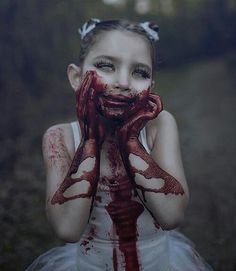 Photographer, 'Vampire Child'
 Darek Zabrocki, 'Twins of Maurer Estate.'
STEALING SECTION
But not now. Adult ghouls had simply... vanished. Even those who had been outed, and lived off of corpses in relatively peaceful lives had disappeared.
An
army was raised. Hundreds of knights on horseback rode out to face to
coming horde. They stood, tall, proud, and only slightly shitting
themselves as nearly a half-thousand blood-soaked children ran faster
than any man up the hill to meet them.
The knights had an advantage besides their superior weaponry and training. The ghouls, although hungry, were still children. The knights were large. When one of them was downed, he or she was swarmed, and devoured in less than a minute. The children, sated and no longer in a frenzy, would flee the battle.
Some escaped. Most died. Just like that, the children's crusade was over. The mystery of where the adults went was never solved. The children were scared and confused. They told tales of waking alone in the night, watched by an enormous snake. They spoke of men made of blood, a grinning skull, and a field of corpses stretching from horizon to horizon. Blood-coloured skies flashing with red lightning, and stick-thin beasts striding through deserts of glass.
Several ghoul children were captured, and raised by an order of knights who paid homage to Gothos. They formed an elite crew of warriors known simply as 'the Crusaders' paying homage to the war they fought so long ago, for reasons they will never fully understand.

STEALING SECTION
How Can I Use This? If you want to use to Children's crusade, here are some ideas for adapting it to your world or game:
1. If you aren't using ghouls or something similar, try vampires. If you want to go for a terrifying mystery, make the ghouls into perfectly normal children, who suddenly grew unearthly strong and developed a taste for human flesh.
2. If you are playing an RPG, why not have the players take part in the groups of knights fighting in the crusade? Or, they could play the poor sods having to escort the captured child-ghouls to their new home, or even take care of them afterward. A ghoul PC could be the survivor of the children's crusade. If you want to get really weird, have the PCs play ghoul children leading up to the crusade itself.
An explanation: I'm sorry about my long absence from writing this blog, I've been very busy with writing, designing version 2 of Lint, and personal matters. I'll try and update it more frequently, and a guest author may make a post or two in the following months. Stay tuned!
Subscribe to:
Posts (Atom)