Showing posts with label undead. Show all posts

Thursday, 15 February 2018

The Hag of Brewer's Wood

This is a small, simple area/adventure you can plop into your campaign wherever. It works best in a northern swamp, boggy and cold. It is shown here in a hexmap format. It uses the silver piece standard, so if you're using D&D or something, just convert all cash to gold.

Brewer's wood isn't quite a town: more like a collection of campfires, tents, and other assorted vagabonds and bandits. They aren't all bad, but the whole place is quite unpleasant.

Random Encounters in Brewer's Wood
1d6:
  1. 1d6 hunters with fresh food, in good spirits.
  2. 1d6 hunters without food, desperate, will trade (they have next to nothing, and if they aren’t bartered with, 3-in-6 chance one will try to steal from you).
  3. A family of 1d6 huddled around a fire (1d4-1 children). They are neutral, but become friendly if you offer them food. They will not share their food with you (they don’t have enough to go around as it is).
  4. 1d6 bandits who want everything you own. 
  5. 1d6 bandits enforcing a toll (1d12 sp/person)
  6. 1d4 small zombie children soaked in alcohol. They came from 34.21. 1-in-6 chance that it will instead be one living child, who will tell you about Ulva Von Stein.
The town itself (33.20) is mostly just hunters and families. They'll tell you their oh-so-sad stories, the bandits will try to recruit you/rob you, and so on.

33.21 has a wooden wall trying to protect the hunters squatting beside it from the cold winds from the snowlands. It doesn't work, and they are miserable and cold. They will trade you meat and gold for warmth.

The Hag of Brewer's Wood
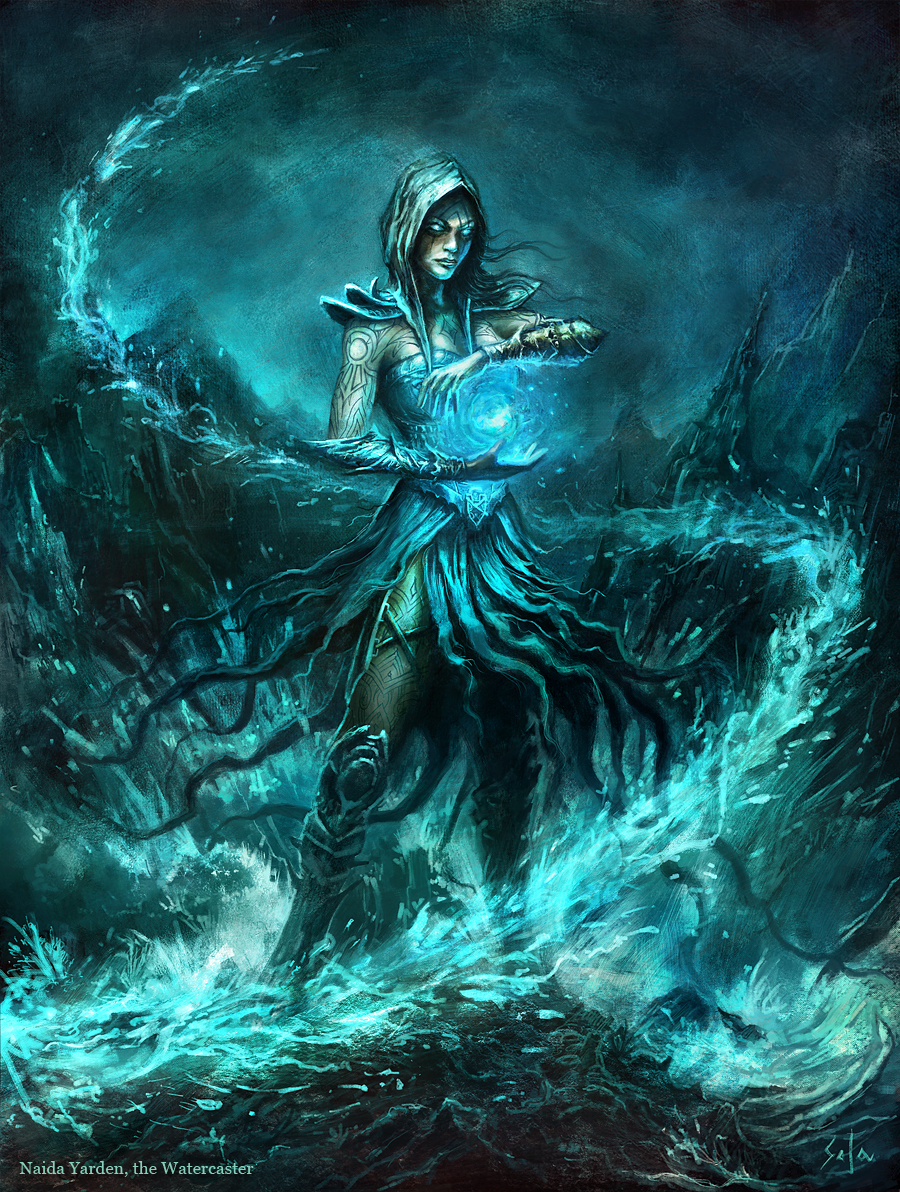
The Hag of Brewer's wood resides in 34.21. Her name is Ulva Von Stein. The hex itself is shrouded in mist, which lets people in, but does not let them out without permission from Ulva, who lives in a giant barrel in the middle of the hex.

She’s been stealing children from the town and burying them in the swamp in barrels. She wants children of her own, but doesn't quite know how to go about it. Some of the children are still alive. Others are undead. If she is threatened, she will raise 2d4 barrels from the ground. 1d4-1 of them will burst open and coughing, half dead children will slide out. The rest will be smashed open from the inside, and ghoulish children will appear, hungry for flesh. Returning living children to their parents will net you 5 silver each.

Ulva wants to be left alone, but will trade you alcohol for necessities or more children. The alcohol allows you to walk through the mists surrounding the swamp. In her hut, there are 1d6 bottles of special mead, labeled with a walking corpse. She won't sell you these. They smell like death, but taste like oddly meaty honey. Drinking one will allow you command mindless undead for 24 hours by speaking to them.

There is a recipe in her hut, which allows a necromancer to make the undead-commanding alcohol (it takes a magically incribed barrel costing 20 silver, 40 silver worth of honey, and some magical energy, as well as 1 month to ferment in a barrel with a corpse in it, and produces 5 bottles). The bottles can be sold for 30 silver each, or the recipe for 100 silver.

 Drawn by some medieval dude.

Sunday, 16 July 2017

Wandering Necromancers and the City of the Dead

A History of Death
Necromancers have been around for a very long time. Almost as long as death itself. They are older than humans, and older than most of the gods. The very first necromancers arose from a race long forgotten, back when words had real power. Back when death was knew, and even more frightening than it is today.

Once upon a time, a young child asked their mother to get up. They sobbed as dirt fell, covering her corpse until it was six feet underground.

But as I said, words had power. The mother's body heard her child, even if the soul had long since departed. She dug her way up before nature even knew what was wrong.

Thus began the necromancers. Kings eternal over kingdoms undying.

Wanderers
Nowadays, most necromancers are Wanderers. You do get the odd extra-antisocial manic who wants to live in a dungeon and conquer the lands of the living, but they don't last long. Sometimes they starve to death, or their focus lapses and their creations eat them. Anything can happen.

There are also sometimes pirates or priests, but they're a different thing altogether. 
  Wanderers, although despised, looked down on, and ridiculed by many, are an integral and valuable part of society. Like retail workers, if they could run an entire store with the corpses of your ancestors and sheer force of will.

Necromancers, in those places out of the eye of the True God, or simply willing to bend some rules, provide labour, defence, or even entertainment, for a fee. Many of the more selfless ones even forgo the cost, doing good deeds for free.

The typical life of a Wanderer follows a simple pattern: Get to town with a group of undead, reanimate as many more as possible, work for a few weeks, get kicked out, repeat.

Of course, they often move on simply because the pay wasn't good, or because they got bored, but mages are notorious drama queens.

All schools of wizardry have a negative emotion that they suffer increasing amounts of, simply from casting their spells. Necromancers are lonely. They have the power at their fingertips to raise armies, bring the dead (partially) back, and turn enemies into friends, but they are lonely.

It's an ironic hell that they live in.

Most small towns were built by Wanderers, or at least started by them. When settlers came, the Wanderers paved the way. They built the first houses in the mountains, and gave the order to drag their own limp, dehydrated bodies across deserts to found sugar plantations.

Wanderers have a strained relationship with the Church of the True God. The Church's inclination to kill all necromancers other than themselves is conflicted with their desire to make life better for themselves and, to a lesser extent, their followers.

With the common folk, Wanderers are treated as an unpleasant necessity. Some towns are more welcoming than others, but the general respond to a Wanderer is 'here's some cash, do the job, and get out.'

Necromancers and ghouls generally fight, as both of them view corpses as a precious commodity. Both of them together, however, will often make a great team.


Necromancy. What is it?
Now: Necromancy is defined as:
Necromancy (/ˈnɛkrəˌmænsi, -roʊ-/[1][2]) is a supposed practice of magic involving communication with the deceased – either by summoning their spirit as an apparition or raising them bodily – for the purpose of divination, imparting the means to foretell future events or discover hidden knowledge, to bring someone back from the dead, or to use the deceased as a weapon, as the term may sometimes be used in a more general sense to refer to black magic or witchcraft.[3][4]
 Now, for today, we're focusing on the 'Bodily part. The core of what a necromancer does. Turning a useless old sack of meat and stink into a helpful old sack of meat and stink. Sometimes this is slow, sometimes this is fast. Sometimes you need to call up the spirit of a fallen warrior to posses the body, sometimes you just need to tell the muscles that to do. It all depends.

In addition, the types of undead are exceedingly varied. You've got your typical zombies, skeletons, crawling claws... but then you have odder things. Skin kites, nailmen, organ-snakes... the list goes on. A sufficiently experienced necromancer should be able to make four or five functional undead from a single body.

Necromancy, at it's heart, is a complicated process. Everyone approaches it differently, and listing all the different methods possible is too large a project for this post.


The City of the Dead 
The City of the Dead is not quite a city. It's a library. Countless rooms, towers, and basements, each filled to the brim with books. It was made over the course of nearly a thousand years, and tended to by an army of undead. Although anyone is allowed to peruse it's endless halls, necromancers are the most frequent patrons.

It is guarded by the same army that cleans it, organizes the shelves, and carries candles for any mortal who wishes to read. The entire place is protected by wards, preventing fires, water, or removal of books.

Mages, the curious, and any who would add to the library's defences or knowledge are welcomed with open arms. No one owns the library, and nobody knows who originally created it, but it protects itself. It has endured the rise and fall of many empires, and catalogued them all.

Some mages have made their homes there, nestled in the crooks and crannies of shelves, seeking out the secrets of immortality, death, and ultimate power within the books. They are most often necromancers, as they can send their servants to fetch food and drink from the outside world.

Ghosts often frequent the halls, often simply to read, wiling away their afterlife on the pursuit of knowledge.


Wednesday, 8 March 2017

Undead Whales and Pirate Necromancers

"I bin trawlin' these waters since I was a wee little scamp, even younger than you, ya grimy landlubber. I thought that nothin' could shock me. Why not? I mean, I seen it all. Eldritch horrors, tentacles coming up from the deep, and fish that could swallow a man whole. I seen a clam as big as an island, with a pearl inside it that glowed bright as the sun. I bin to an island full o' monkies that swam and hunted seals. But I ain't never seen something like that before."

"It was on us like jus' another wave, we din' even see it comin.' The ocean rose up, and a shape crashed into the hull. We looked over the side, and it was a whale. An undead whale, bone showing through in places, and it's eyes were rotting out -o- it's head. Flesh hung off of it like tattered sails of some ghost ship."

"The beast opened it's mouth, and undead charged from it's belly, all shoutin' and screamin' wit' no lungs to draw breath. I suppose inside that monster, they could jus' sit still, waitin' fer it to find their prey for 'em. But that wasn't the worst part. The worst part was what came after. A man, a normal lookin' man, with robes like a mage. He pointed out a few of our men, includin' the captain and the undead dragged em,' kicking and screaming, down into the depths. And then he walked back, calm as you please, back into his monstrosity."

"I don't sail the seas no more, and there's a good reason for that. Ain't no gold nor treasure that's worth another run-in with those particular pirates."

-Anonymous retired sailor

Undead Whales
This ain't your grandma's Free Willy.
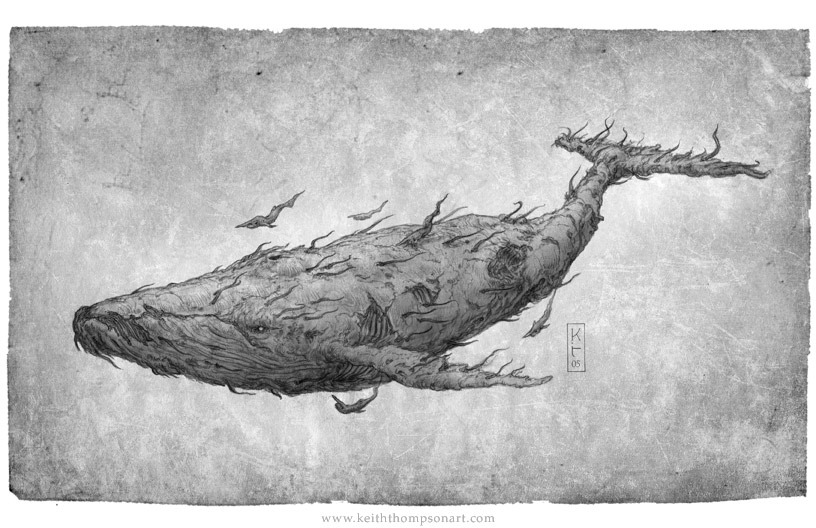
Undead whales are a surprisingly common sight in the ocean. Although many people do not believe it to be true, necromancers can die, usually of old age. In fact, their bodies break down faster than that of most people, and so it is actually quite common for them to die peacefully before their corpses are ripped to shreds by their minions.
Undead whales are usually the toughest, largest, and most non-threatening undead beings when left along. Therefore, when their creators die, the whale will often swim aimlessly around the ocean, attempting to eat plankton that comes near. They will eventually break down, as the feedings of countless parasites and tenacious bottom-feeders eat the body as the whale drifts on, seeing no reason to try and stop them.

Seeing an undead whale is an both humbling, sad, and amazing sight. Two hundred tons of dead, rotting flesh, swimming until it's body simply falls to pieces. It surfaces, although it does not need to breath, and then dives back down, leaving scraps of flesh behind it.

Sailors think they are good luck, representing freedom, and do not trouble them. The logic is that if an enormous whale managed to evade whalers for that long, and then managed to escape death itself, and outlived it's one-time master, it deserves to swim for as long as it can. This sometimes brings them into conflict with druids of the sea, who regard the whales as abominations to be snuffed out, and will go to horrendous lengths to get rid of them. Mer and devotees of the Drowned God view undead whales as curiosities, and beings to be harnessed if possible for their own ends.

Undead whales are usually created by necromancers as transportation. They are self-controlled and tireless, meaning that the mage does not have to waste labour getting minions to steer or pilot. They are also mostly waterproof, and can dive deep down underwater. If the necromancer is the only living being on board, then the whale's body will contain more than enough oxygen for them to stay under long enough to evade any would-be pursuers.

The process of creating an undead whale is long and arduous, but requires a surprisingly small amount of magic. People theorize the reason is because of the innate magic whale fat possesses.

First, a whale carcass must be obtained. Usually this is done by hiring sailors to hunt the whale, which is then towed back to land. Sometimes, a whale carcass will wash up on shore, but this is a more dangerous practice, as those have the tendency to explode in a blast of build-up gas.

Next, the carcass is cleaned. Some scrupulous or unlucky necromancers do this themselves, walking into the body of the whale and hauling out most of the fat and internal organs, to make room for inhabitants. Most use undead servants or hired labourers to do this work for them.

After, any holes or unnecessary orifices are patched up with the liberal application of tar, to prevent leaks.

Most necromancers don't like working on corpses 
themselves, but there are weirdos in every job.

Necromancer Pirates
Although pirating isn't the first thing most people associate with necromancy, many people practice both professions. Some see a certain irony in it. For all everyone fights, they are the only ones left with any money in the end.

Mostly though, it is just to make cold, hard cash. necromancers don't have to pay their totally obedient and loyal crew, and can get more any time they please.

A pirate's death for me.

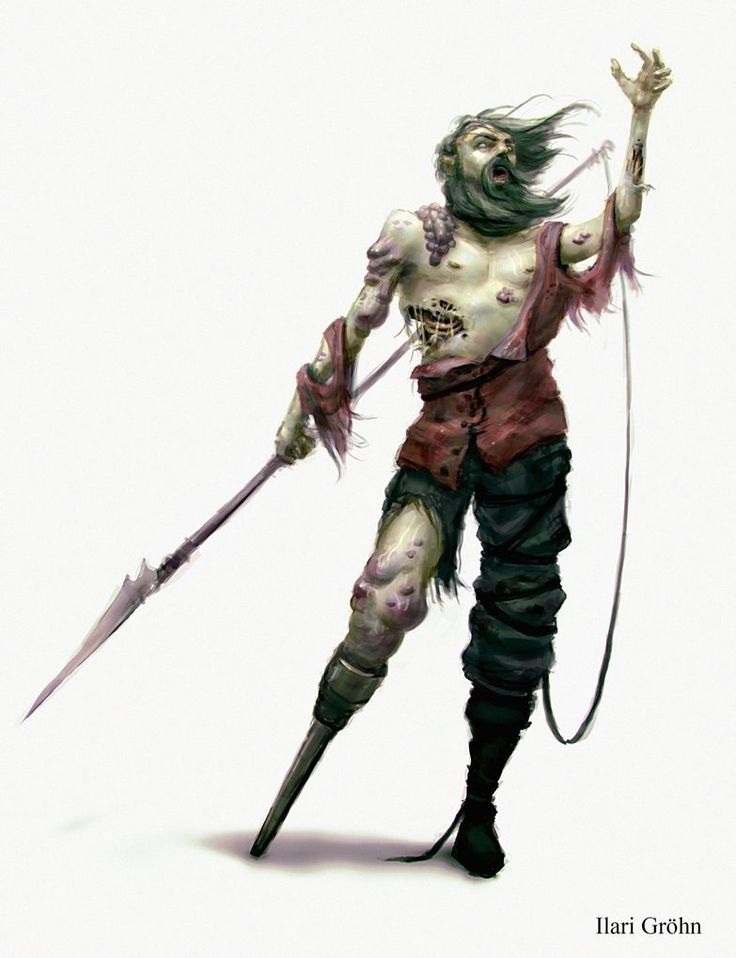
They strike more fear into people's hearts than regular pirates, they lurch on, uncaring, as their bodies burn. Even as they are impaled, they simply laugh, grab their opponent in a bear hug, and attempt to throw themselves over the side. What do they have to fear? Nothing. What remains of life is sweet, and death is a release.

When a necromancer ship or whale comes on the horizon, a crew knows what it faces. Warriors with nothing to fear.

Necromancer pirates are found the world over. Although they often begin their seafaring escapades in tropical lands, many of them migrate north, to colder waters, with less sea-creatures to eat their beloved whales, and no heat to rot their other servant's flesh.

In response to this threat, the Church of the True God sent out ships, called 'Dawnbringers' to fight against necromancer pirates. They are crewed by monks, paladins, and priests, and the Dawnbringers light up the night when they attack. Every inch of the ship has been soaked in holy water at least once. Dawnbringers that have been on the ocean for a long time convert the water and rain near them into holy water, scorching undead whales and pirates alike.

There is a strange psuedo-war going on between the Dawnbringers and the pirate necromancers. The necromancers cannot send their sailors to attack the ships directly, so they sneak past. They invade their peaceful temple, raid their merchant ships, and set fire to their boats. But they never fight them. Not directly.